
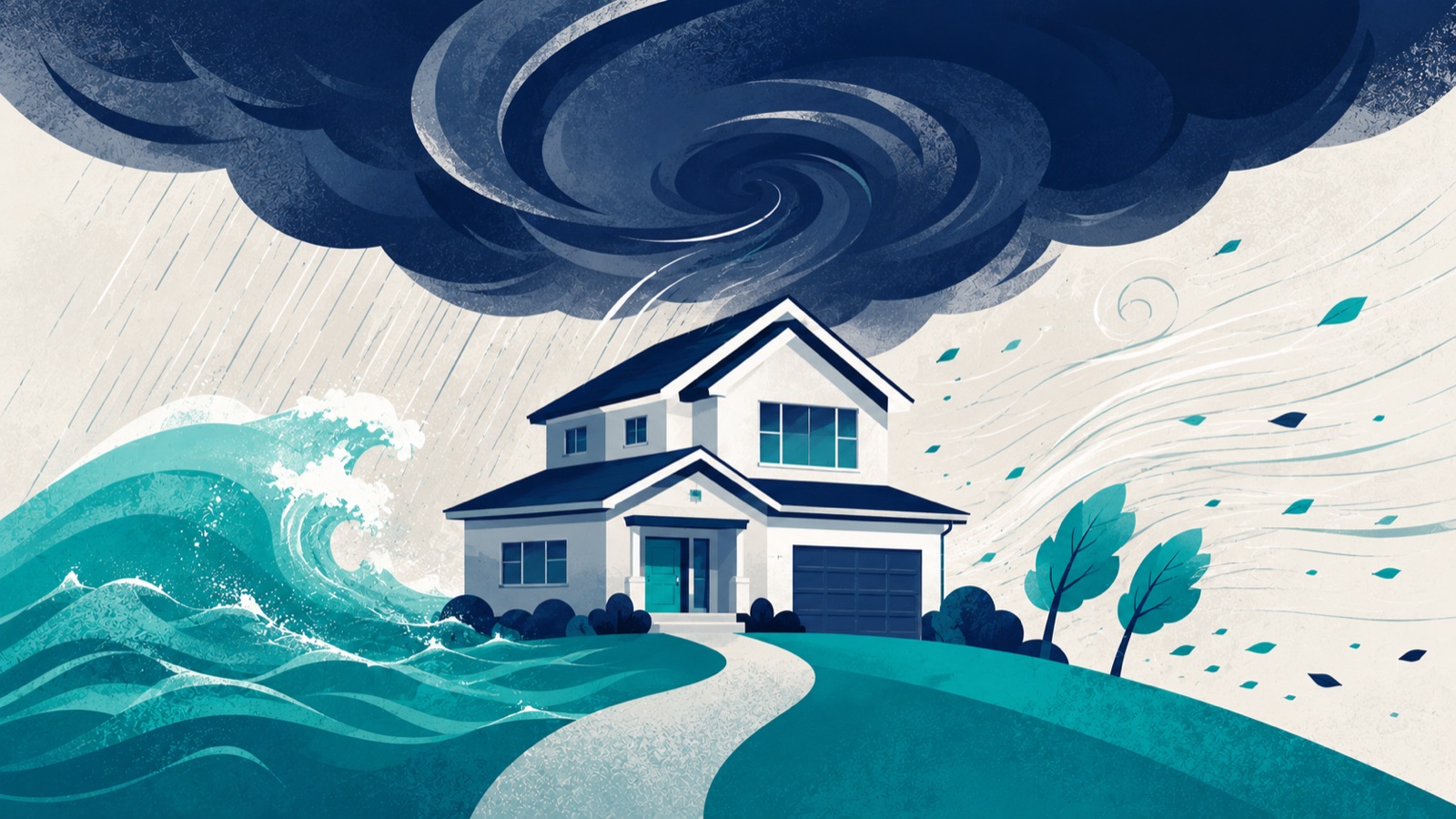
Every summer, I have some version of this conversation with a North Carolina homeowner: “I have homeowners insurance, so I’m covered if a hurricane hits — right?”
The honest answer is: partly. And the part that’s missing surprises people every single year.
- To your insurance, a hurricane isn't one event — wind damage and flood damage are treated completely differently.
- Standard homeowners policies exclude flood damage. Flood coverage is a separate policy — and it typically has a 30-day waiting period.
- You don't need a beach house to flood — flood losses regularly happen outside mapped high-risk areas, including inland North Carolina.
A hurricane is two different events to your insurance
When a hurricane comes through, it does damage two ways: wind and water. Your insurance treats those as separate problems.
Wind damage — shingles torn off, a tree through the roof, siding ripped away, and the rain that gets in through that storm-created opening — is typically covered by a standard homeowners policy in most of North Carolina. One caveat: some policies, especially in coastal counties, handle windstorm coverage separately or apply a separate hurricane deductible, which is often a percentage of your home’s insured value rather than a flat dollar amount. That’s worth checking on your policy before you need it.
Flood damage — water rising from the ground up, whether from storm surge, an overflowing creek, or rain the ground simply can’t absorb — is a different story entirely.
The exclusion that catches everyone
Here it is plainly: standard homeowners insurance generally excludes flood damage — including storm surge and water that rises or overflows onto your property, no matter how severe the storm that caused it. Coverage for water backup is a separate question: some policies include or offer a sewer-and-drain backup endorsement, so it’s worth checking whether yours does.
Flood protection comes from a separate flood insurance policy — most commonly through the National Flood Insurance Program (NFIP), and in some cases through private flood insurers.
| Typically covered by homeowners | Requires separate coverage | |
|---|---|---|
| Wind tears off shingles or siding | ✓ (check for hurricane deductibles) | |
| Tree falls and damages the house | ✓ (subject to deductible & policy terms) | |
| Rain enters through storm damage | ✓ | |
| Storm surge or rising water | ✓ Flood policy | |
| Creek or pond overflows | ✓ Flood policy | |
| Flash flooding from heavy rain | ✓ Flood policy | |
| Your car is flooded | ✓ Comprehensive auto coverage |
That last row surprises people too: a flooded vehicle isn’t a homeowners claim at all — it falls under the comprehensive portion of your auto policy, if you carry it.
“But I’m not in a flood zone”
A flood map shows where flooding is most likely — not every place it can happen. Heavy rain, drainage problems, and nearby creeks can create flood losses well outside a mapped high-risk area, and it only takes a few inches of water across a floor to generate a five-figure loss.
Charlotte isn’t beachfront, but we’re not exempt. Hurricane Florence was a hard reminder that inland North Carolina homes can face serious flood damage too — and that a homeowners policy was never going to be the thing that paid for it.
What to check on your policy before the season peaks
Atlantic hurricane season runs June 1 through November 30, and the historical peak lands around mid-September. A 20-minute review before then beats a bad surprise after. Here’s what I’d look at:
Your wind coverage and deductible. Confirm windstorm damage is included in your policy, and find out whether a separate hurricane or named-storm deductible applies. A percentage deductible on a $400,000 home can mean a much bigger out-of-pocket number than you’re picturing.
Whether flood coverage makes sense for your property. Not every home needs it — it’s a judgment call based on your location, terrain, and finances. But it should be a decision, not a default, and many families have never actually priced it.
Your rebuild coverage amount. Construction costs have risen sharply in recent years, and a policy that was right a few years ago may not rebuild the same house today. This is the core of what homeowners coverage is for — it’s worth getting right.
Your documentation. Walk through your house with your phone camera. Five minutes of video of every room, saved somewhere off-site, makes any future claim dramatically smoother.
Where this leaves you
The goal here isn’t to make storm season feel scarier. It’s to make sure you know what your policy would do before you need to rely on it — because the families who come through storm season fine are mostly the ones who knew exactly what was and wasn’t covered before the wind picked up.
If you’re not sure where your policy stands on wind, flood, or rebuild value, that’s exactly the kind of review I do. I work with multiple carriers and I’ll walk through your actual coverage with you, in plain English, before the season peaks.
If it’s been a few years since anyone looked at your homeowners policy — or if you’ve never priced flood coverage — book a call and we’ll go through it together.